
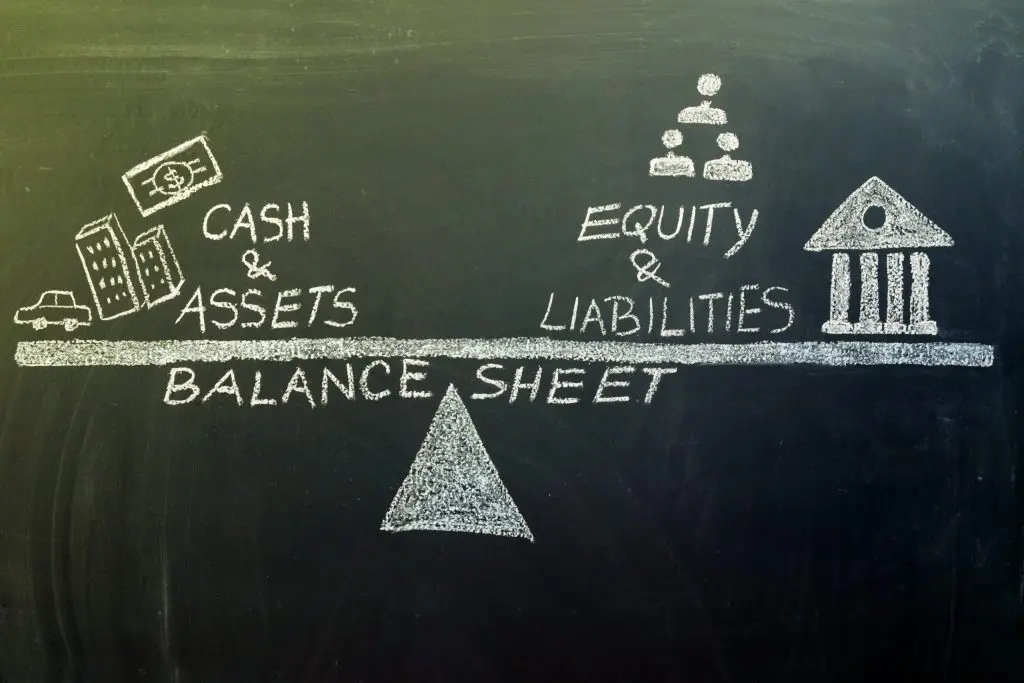
A construction company’s balance sheet shows what the company owns, what it owes and what’s left for the owners on one date, usually month-end or year-end. Your surety and your bank read it first, because it shows whether you have the working capital and equity to finish the work you have and take on more.
This guide covers what’s on a contractor’s balance sheet, what sureties and banks look for, and how to make it stronger.
What’s on a contractor’s balance sheet
| Section | Construction items |
|---|---|
| Current assets | Cash, contract receivables, retainage receivable, underbillings (costs and estimated earnings in excess of billings), inventory, prepaid expenses |
| Fixed assets | Equipment, vehicles and buildings, less depreciation |
| Current liabilities | Accounts payable, retainage payable, overbillings (billings in excess of costs and estimated earnings), the line of credit, the current part of loans, accrued payroll and taxes |
| Long-term liabilities | Equipment loans, mortgages and other long-term debt |
| Equity | What the owners put in plus retained earnings, less distributions |
What sureties and banks look at
- Working capital: current assets minus current liabilities. It’s often the first number a surety looks at when it sets your bonding program.
- Equity: what’s left for the owners, and how much loss the company can absorb.
- Cash: how much is actually in the bank.
- Quality of receivables: old receivables, and retainage that should already have been released, may not count at full value.
- Underbillings and overbillings: large underbillings can mean unbilled work or a loss that hasn’t been recognized yet. Overbillings are a liability: cash you’ve collected for work you haven’t done.
- Debt: how much the company owes compared with its equity.
- Loans to owners or related companies: sureties often don’t count them toward working capital.
Underbillings and overbillings come from your WIP
These two lines come straight from your WIP schedule. Underbillings are an asset: work done but not billed. Overbillings are a liability: money billed for work not done yet. If the WIP schedule is wrong, the balance sheet is wrong.
When a surety discounts your balance sheet
We see this in surety meetings, including one Alan sat in on recently: the surety sets aside parts of the balance sheet it doesn’t trust, and working capital shrinks. In round numbers, it works like this. A balance sheet shows $1.2 million of current assets and $800,000 of current liabilities, so working capital is $400,000. If $150,000 of those assets is underbillings on a struggling job and $50,000 is a loan to the owner, a surety may set both aside, and in its eyes working capital is closer to $200,000.
How to make your balance sheet stronger
- Close the books every month and keep the WIP schedule current.
- Bill your underbillings and collect old receivables.
- Chase retainage at closeout.
- Leave profit in the company if you need more bonding, instead of distributing all of it.
- Settle loans to owners and related companies.
- Finance equipment with term loans, not your line of credit.
- Give your surety CPA statements at the level your bonding program needs. See audited vs reviewed financial statements.
How often to review it
Every month, together with your income statement and WIP schedule. Your surety and bank may only see it quarterly or once a year, but you shouldn’t wait for them.
How we help
We close your books every month and deliver your balance sheet with your WIP schedule and job reports, so you see what your surety will see before they do. See our monthly financial reporting for contractors, bonding and bank lines for contractors, or all our construction accounting services.
FAQs
What’s on a construction company’s balance sheet?
Cash, receivables, retainage, underbillings and equipment on the asset side; payables, retainage payable, overbillings and debt on the liability side; and the owners’ equity.
What do sureties look for on a contractor’s balance sheet?
Working capital, equity, cash, the quality of receivables, underbillings and overbillings, debt, and loans to owners or related companies.
Are underbillings an asset or a liability?
An asset. Underbillings are work you’ve done but haven’t billed yet. Overbillings are a liability.
How do you calculate working capital?
Current assets minus current liabilities.
How often should a contractor review the balance sheet?
Every month, together with the income statement and WIP schedule.
How do you read a balance sheet?
Start with the equation: assets equal liabilities plus equity. Assets are what the company owns or is owed, liabilities are what it owes, and equity is what’s left for the owners. For a contractor, look first at cash, receivables and retainage on one side, and payables, loans and overbillings on the other.